
You have been carrying this alone for long enough.
New Jeevan Care Centre is a rehabilitation and de-addiction centre in Chennai for alcohol and drug dependence. Residential and outpatient treatment, counselling, family support and aftercare — handled privately, and without treating anyone as a failure.
- Fully confidential
- Same-day admission possible
- Family counselling included
- Aftercare for six months
- Tamil & English
The three questions every family asks us
Nobody rings a rehabilitation centre casually. By the time you call, you have usually been thinking about it for months. These are the three things you are probably worried about right now.
“He will never agree to come.”
Most people do not agree at first. That is part of the condition, not a sign that treatment is impossible. What changes it is usually a planned conversation with the right person in the family leading it, at a sober moment, with specific consequences rather than threats.
Call us before you confront him. That one call often decides whether he walks in or disappears for six months.
“How long before he is normal again?”
The body settles in one to two weeks. The person you remember usually starts coming back in the second month. Judgement, patience and honesty take longer.
Anyone promising a cure in fifteen days is selling you something. Be careful with centres that do.
“Can we even afford this?”
Treatment costs less than another year of the drinking usually does — and far less than the hospital admission that often follows it.
We give you the full figure before admission, with no later additions. Ask on the call.
Signs the drinking or the drugs have stopped being a choice
Dependence is not about how much someone uses. It is about whether they can reliably stop. If four or more of these are true in your house, willpower has already been tried and has already failed.
- He has genuinely meant it every time he promised to stop
- The first drink of the day has moved earlier and earlier
- Hands shake, or sleep is impossible, on a day without it
- Money leaves the house and nobody can account for it
- He is fine in front of guests and unrecognisable afterwards
- The children have started staying in their room
- A doctor has already warned him, and nothing changed
- You have stopped inviting people home
What New Jeevan Care Centre provides
The programme is built after an assessment. Nobody is sold a fixed package before we know what we are dealing with.
Supervised withdrawal
The first days are the hardest and, with alcohol, the most dangerous. Withdrawal is monitored around the clock and managed so the person is kept safe and as comfortable as possible.
How de-addiction works → AlcoholAlcohol de-addiction
The most common reason families call us, and the dependence with the most serious withdrawal. Treated with medical supervision first, then counselling on what the drinking was doing for him.
Alcohol treatment → DrugsDrug de-addiction
Cannabis, prescription tablets, opioids, inhalants and stimulants. Each has its own withdrawal pattern, so the first week is planned around the specific substance.
Drug treatment →Residential rehabilitation
Living at the centre for an agreed period, with a full daily programme, away from the people and places tied to using.
Day care and outpatient
For early dependence with mild withdrawal and a supportive home. Counselling and reviews on a fixed schedule while work or studies continue.
Family counselling programme
Separate sessions for parents, partners and siblings. What to change at home, what to stop doing, and how to spot a relapse early.
Family support →Individual and group counselling
One-to-one sessions on the reasons underneath, and group sessions where people in recovery keep each other honest in a way staff cannot.
Six-month aftercare
Follow-up calls, review sessions and family check-ins through the period when relapse risk is highest.
Tobacco and behavioural dependence
Tobacco and gutkha cessation, and support for gambling and compulsive gaming, which follow the same pattern as substance dependence.
What the months actually look like
Families are rarely shown this before admission. Here is the shape of a residential programme, stage by stage.
-
Days 1–7
Getting through withdrawal safely
Round-the-clock monitoring, medication decided and reviewed by a doctor, fluids and nutrition. Most people arrive badly run down. Almost no therapy happens this week and that is correct — the body comes first.
-
Weeks 2–4
Sleep, routine and the first honest conversations
Sleep is repaired, because very little else improves until it is. A fixed daily routine replaces the chaos. Individual counselling starts on what the substance was managing — stress, grief, anger, sleeplessness, or a circle where it was simply normal.
-
Weeks 5–8
Group work and family sessions
Group therapy becomes the main engine. Family sessions run separately, so nothing has to be held back on either side. This is usually when the family first sees the person they remember.
-
Weeks 9–12
Relapse prevention and rebuilding
A written plan: known triggers, what to do about each one, who to call, and how the family should respond to early warning signs. Alongside it, the practical work — returning to employment, handling money, repairing relationships.
-
After discharge
Six months of follow-up
Discharge is not the end of treatment. Review sessions, follow-up calls and family check-ins continue, because the first six months at home is exactly when the risk is highest and the support usually disappears.
Four things we will not tell you
Every centre in Chennai says it is the best rehabilitation centre in Chennai. Judge them instead by what they refuse to promise.
What actually decides the price
Most centres will not discuss this until you visit. We would rather you knew what drives the number before you call, so the conversation is short and honest.
We quote the complete figure before admission. Nothing is added later, and there is no separate bill at discharge for things that should have been included.
Call 98842 52035 and ask directly. If any centre will not give you a written figure, walk away.
| Factor | Why it changes the cost |
|---|---|
| Length of stay | 30, 60 or 90 days. The single biggest factor. |
| Room type | Shared or private accommodation. |
| Level of medical support | Severe withdrawal needs closer monitoring in the first week. |
| Existing health problems | Liver, diabetes or blood pressure issues need extra review. |
| Residential or outpatient | Outpatient costs considerably less but suits fewer people. |
| Aftercare | Ask whether follow-up is included or billed separately. With us it is included. |
Families reach us from all over the city
Maduravoyal sits near the Chennai Bypass and Poonamallee High Road, so most of west and north Chennai is within half an hour.
- Maduravoyal
- Mogappair
- Ambattur
- Anna Nagar
- Koyambedu
- Vadapalani
- Porur
- Valasaravakkam
- Virugambakkam
- Avadi
- Thirumangalam
- Padi
- Villivakkam
- Poonamallee
- Ramapuram
- Saligramam
- Ashok Nagar
- T. Nagar
- Tiruvallur
- Sriperumbudur
Before you pick up the phone
What is the difference between a rehabilitation centre and a de-addiction centre?
In practice most people use the words for the same place. Technically de-addiction is the first stage, where the substance leaves the body and withdrawal is managed, usually one to two weeks. Rehabilitation is the longer stage after it: counselling, routine, group work, family sessions and a relapse plan. New Jeevan Care Centre provides both as one continuous programme rather than sending people elsewhere halfway through.
How soon can someone be admitted?
Often the same day. Call the helpline and describe the situation. If the assessment shows residential care is needed and a bed is free, admission can happen immediately. If withdrawal is likely to be severe, faster is safer.
Do you accept women?
Call the helpline and ask about current arrangements before you travel. Dependence in women is usually hidden for far longer because of stigma, which means it is more advanced by the time a family asks for help. Those enquiries are handled with extra discretion.
How long will the person need to stay?
Most residential programmes run 30 to 90 days. Less than 30 days rarely holds, because the first two weeks go on withdrawal and the actual therapy has barely started. The length is set after assessment, based on how long the dependence has lasted, which substance, and previous attempts to stop.
Will anyone at his workplace find out?
Not from us. Admission records and treatment details stay within our clinical team. Many people use accumulated leave. If work cannot be paused at all, ask about the outpatient programme at the assessment.
What if he refuses to come?
This is the most common call we get. Admission in India is governed by the Mental Healthcare Act 2017, which protects the rights of the person being admitted, so no honest centre can promise to simply collect someone. What usually works is a planned family conversation. Call us first and we will help you plan what to say and who should say it.
Is New Jeevan Care Centre easy to reach from the rest of Chennai?
Yes. We are in Maduravoyal, close to the Chennai Bypass and Poonamallee High Road, which makes us reachable from Ambattur, Mogappair, Anna Nagar, Porur, Vadapalani, Koyambedu and Avadi within 20 to 30 minutes.
What happens after the person comes home?
Aftercare continues for months. Follow-up calls, review sessions, relapse warning signs taught to the family, and continued counselling. Most relapses happen in the first six months after discharge, so that is where the support has to be concentrated.
See the place before you decide anything
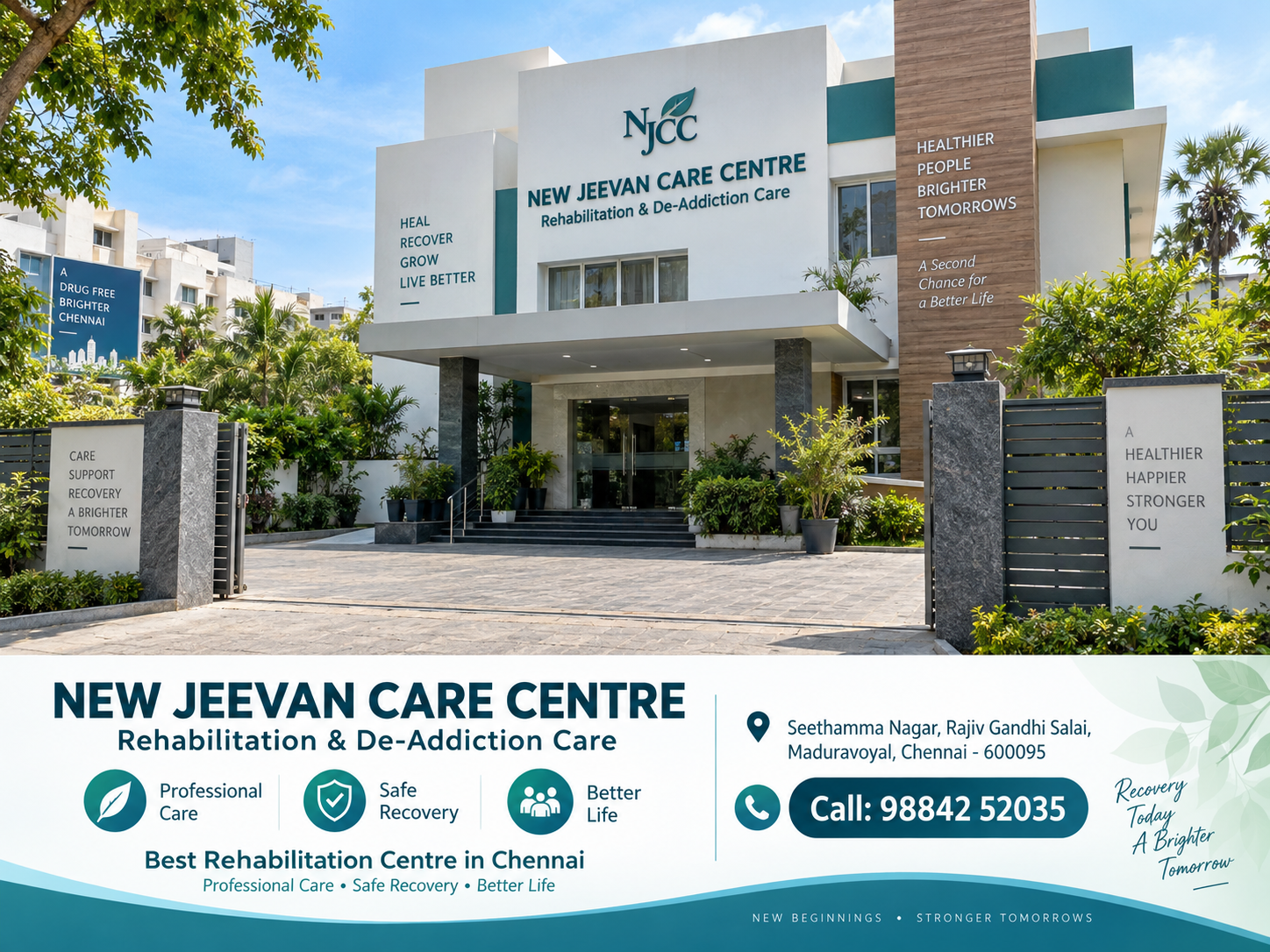
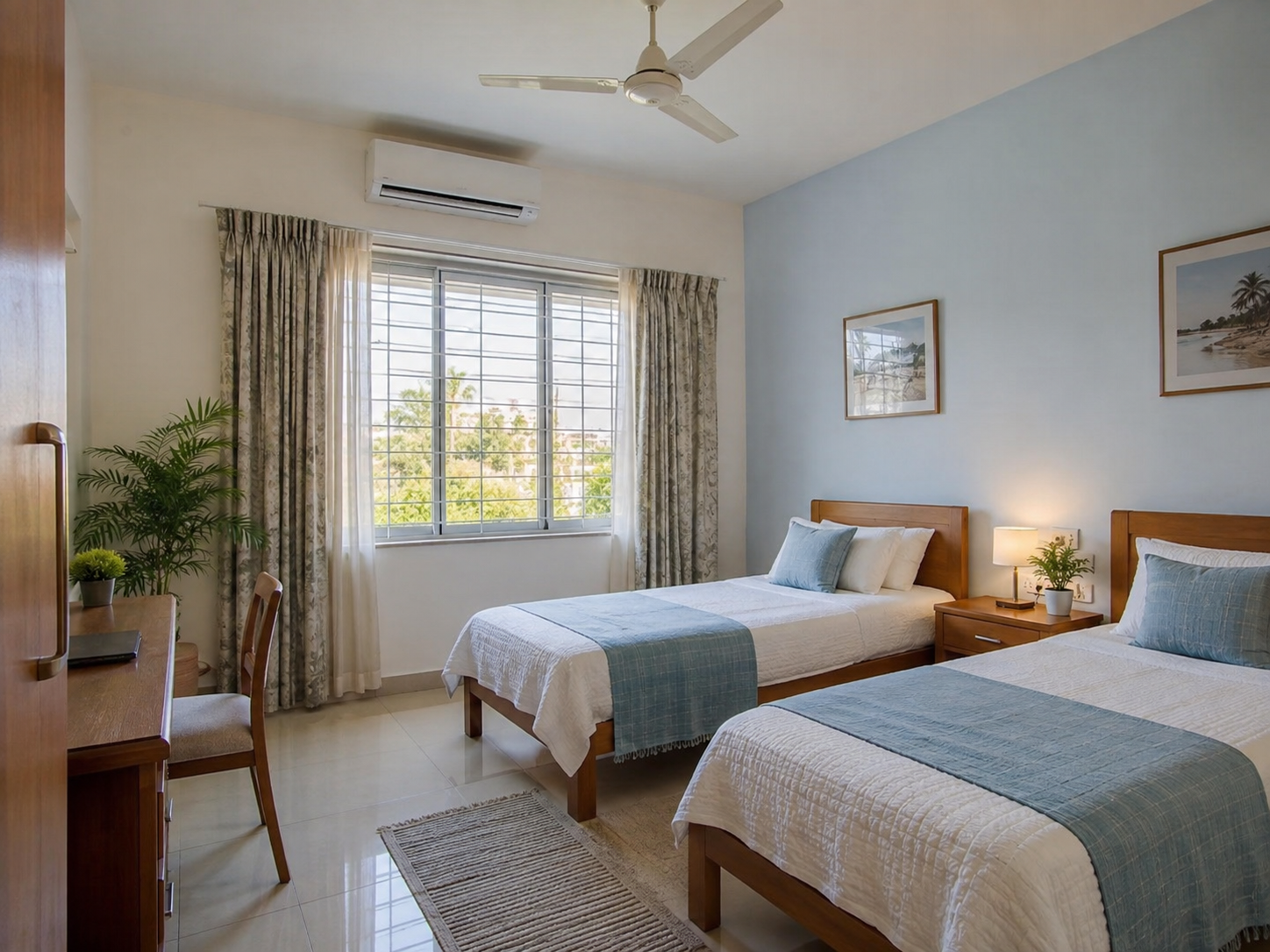
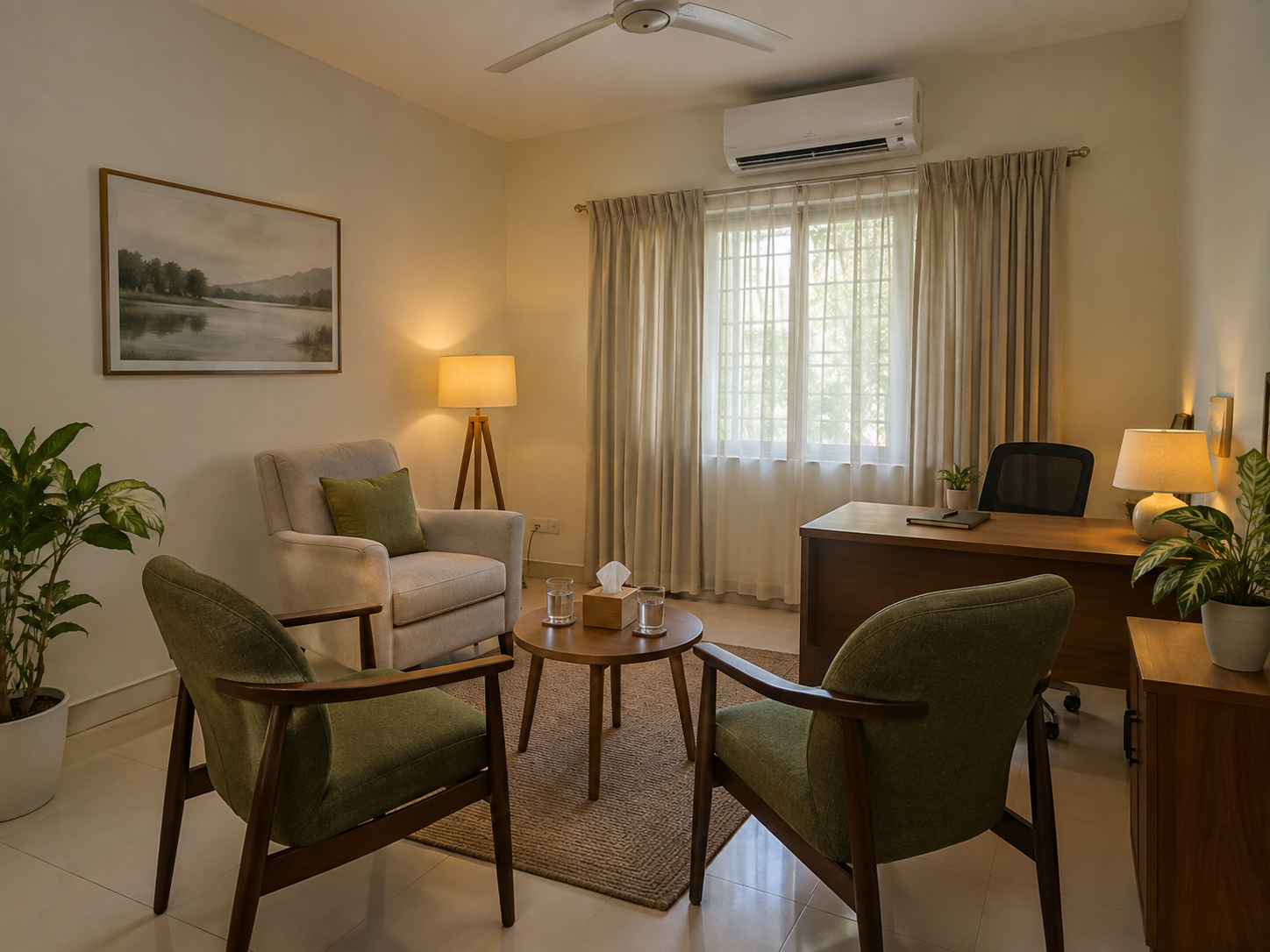
Families are welcome to visit. These are the rooms, the counselling space and the building at our Maduravoyal centre.
The first call is the hardest. It is also the shortest.
Five minutes on the phone will tell you more than a week of searching. Describe what is happening and we will tell you honestly what the options are.