
De Addiction Centre in Chennai
Supervised withdrawal for alcohol, drugs, prescription tablets and tobacco — running straight into full rehabilitation, in one place.
De-addiction is the first two weeks. It is not the treatment.
Families searching for a de addiction centre in Chennai are usually picturing one thing: get the alcohol or the drug out of his system. That stage is real, it matters, and it has to be done safely.
But on its own it almost never holds. A person who completes only withdrawal goes back to the same house, the same friends and the same pressure with nothing new to handle it with. The body is clean and everything that caused the using is exactly as it was.
At New Jeevan Care Centre the withdrawal stage runs straight into the rehabilitation stage as one programme, in one place, with the same team. Nobody is discharged at the most fragile point and told to find counselling elsewhere.
Withdrawal is different for every substance
This is why we ask you to be completely honest at the assessment about what has been used and how much. The plan for the first week depends entirely on the answer. Nothing said in that room is judged.
| Substance | Symptoms start | Worst period | How risky |
|---|---|---|---|
| Alcohol | 6–12 hours | 24–72 hours | Can be dangerous. Risk of seizures. Must be supervised. |
| Sleeping tablets & anxiety medication | 1–4 days | Up to 2 weeks | Can be dangerous. Must be tapered slowly, never stopped suddenly. |
| Opioids (heroin, brown sugar) | 8–24 hours | 2–4 days | Extremely uncomfortable but rarely life-threatening. |
| Cannabis / ganja | 1–2 days | 3–7 days | Mainly psychological — irritability, sleeplessness, low mood. |
| Stimulants | Within 24 hours | 3–5 days | Heavy fatigue and low mood. Mood needs watching closely. |
| Tobacco / gutkha | 2–6 hours | 3 days | Not dangerous, but cravings are persistent for weeks. |
Please do not stop alcohol or sleeping tablets suddenly at home
These two are the exceptions. Stopping them abruptly without medical supervision can cause seizures. If a previous attempt to stop produced fits, severe confusion or hallucinations, say so on the first call — it completely changes how the first week must be handled.
What is watched during the first week
This is the part that separates a supervised withdrawal from simply locking someone in a room until it passes. Ask any centre you are considering what they actually monitor.
- Pulse and blood pressureChecked through the day and night, because both climb sharply as withdrawal peaks.
- Confusion and disorientationThe earliest warning sign that withdrawal is turning severe.
- Hydration and nutritionAlmost everyone arrives dehydrated and undernourished, which makes everything else worse.
- SleepTracked from the first night. Sleep returning is the first sign the body is settling.
- Existing health problemsLiver, blood pressure, diabetes and old injuries all need reviewing at admission.
- MoodLow mood during withdrawal is normal. Low mood that keeps deepening needs a different response.
Why home detox usually fails
Families try it first almost every time, and there is no shame in that. But it fails for three predictable reasons.
- The substance is still reachableAt 3am on day two, willpower is not what decides the outcome. Distance is.
- Nobody can monitor for a weekYou cannot check pulse and confusion through the night while also going to work.
- Relationships get in the wayHe will argue with a wife or a mother in a way he will not argue with a nurse. That is not a failing in either of you.
About de-addiction treatment
Is de-addiction the same as rehabilitation?
No. De-addiction is the first one to two weeks, where the substance leaves the body and withdrawal is managed. Rehabilitation is everything after it. Completing only the de-addiction stage and going home is the single most common reason people relapse within a month.
Why can we not just do it at home?
Three reasons. Alcohol withdrawal can cause fits and is medically dangerous without supervision. Second, the substance is usually still reachable at home, and at 3am on day two that matters more than willpower. Third, nobody at home can monitor blood pressure, pulse and confusion through the night for a week.
Which substance has the most dangerous withdrawal?
Alcohol and benzodiazepines such as sleeping tablets. Both can cause seizures if stopped suddenly, and both must be tapered under supervision. Opioid withdrawal is intensely uncomfortable but is rarely life-threatening. Cannabis withdrawal is mainly psychological, with irritability, sleeplessness and low mood.
Will he be sedated the whole time?
No. Medication during withdrawal is used to keep someone safe and to take the edge off symptoms, not to keep them asleep for a week. It is prescribed and reviewed by a doctor, and reduced as symptoms settle. A person who is sedated throughout cannot begin therapy, which is the part that actually prevents relapse.
How do you decide between residential and outpatient?
Residential is usually right when withdrawal is likely to be severe, when there have been previous relapses, when the substance is easily available at home, or when the home itself is a trigger. Outpatient can work when the dependence is recent, withdrawal is mild and the family is genuinely supportive. The assessment decides, not the phone call.
Do you treat sleeping tablet and painkiller dependence?
Yes, and it is more common than people think, precisely because it started with a valid prescription. These must never be stopped abruptly. Bring the prescriptions and the strips to the assessment so the tapering plan is built on what was actually being taken.
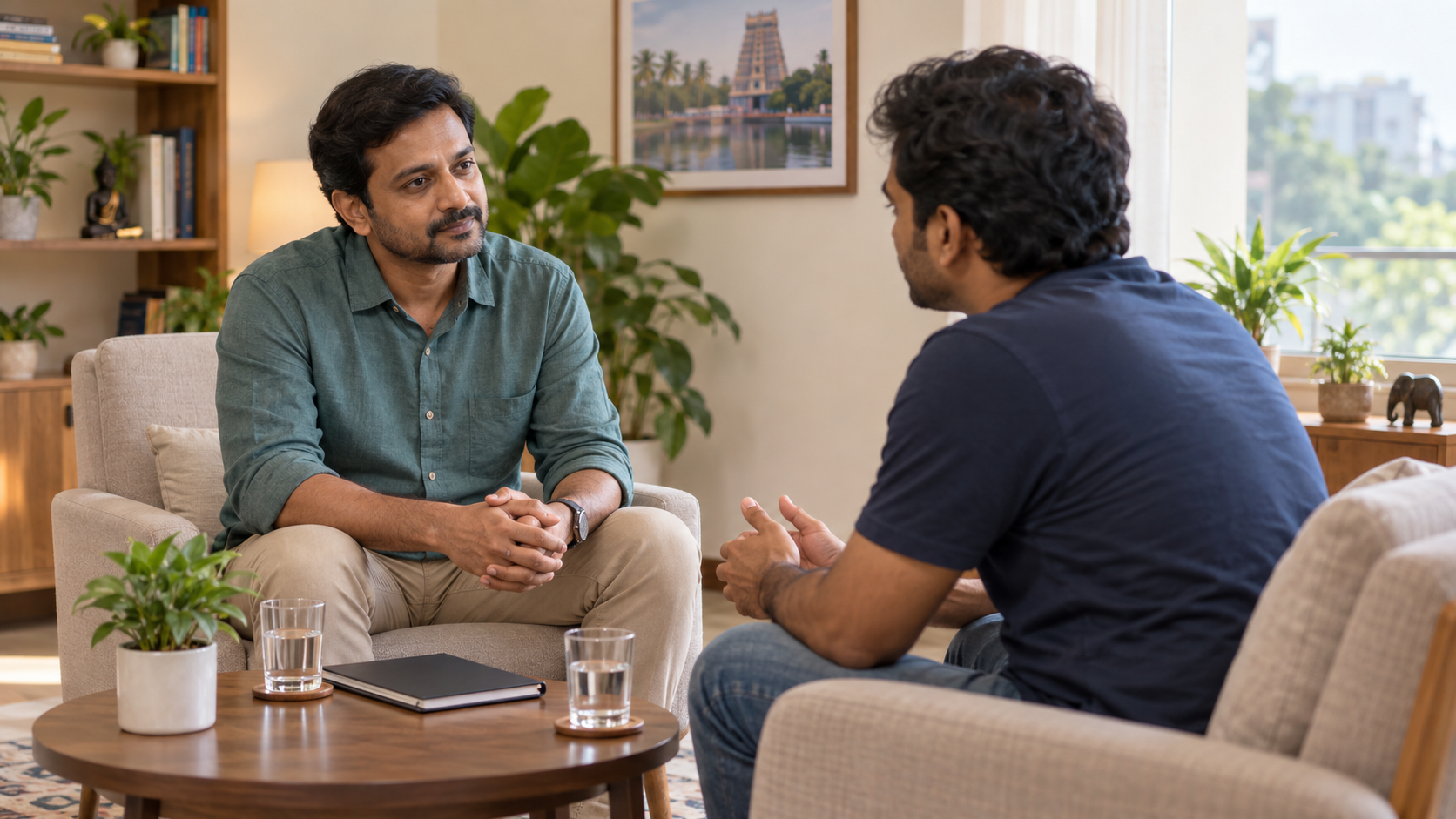
Tell us what has actually been used
The honest version, not the version he gave the family. That is what makes the first week safe. Nothing said on the call goes anywhere else.